
Connecticut Scaffolding provides the professional-grade platforms, hoists, and components required for complex facade projects. We don’t just supply equipment; we provide the logistical support and project-specific configuration to ensure your crew has the right tools for the job.
Get your site-specific quote in 24 hours. Call us (475) 231-6743 or request a takeoff online.
Suspended scaffolding is a work platform hung by ropes or cables from an overhead roof anchor, rather than built up from the ground. It’s the primary system for vertical facade work, window installation, and masonry repair on buildings where ground space is limited or the height makes ground-supported scaffolding impractical.
We deploy specialized systems engineered for specific facade access requirements:
The industry standard for long-run horizontal work. It consists of a platform supported by two stirrups (the side frames that hold the platform), each suspended by a cable from an overhead roof-rigging system.
A compact platform suspended by a single cable. Used for architectural detailing, spot repairs, or work on tight facade segments.
A heavy-duty system where a large platform is supported by more than two cables. This allows for massive vertical runs and high-capacity crews.
A boatswain's chair (a single-person hanging seat used for light inspection work) is a single-person seat suspended by a single rope. Used exclusively for highly localized, short-duration tasks like inspections or minor painting.
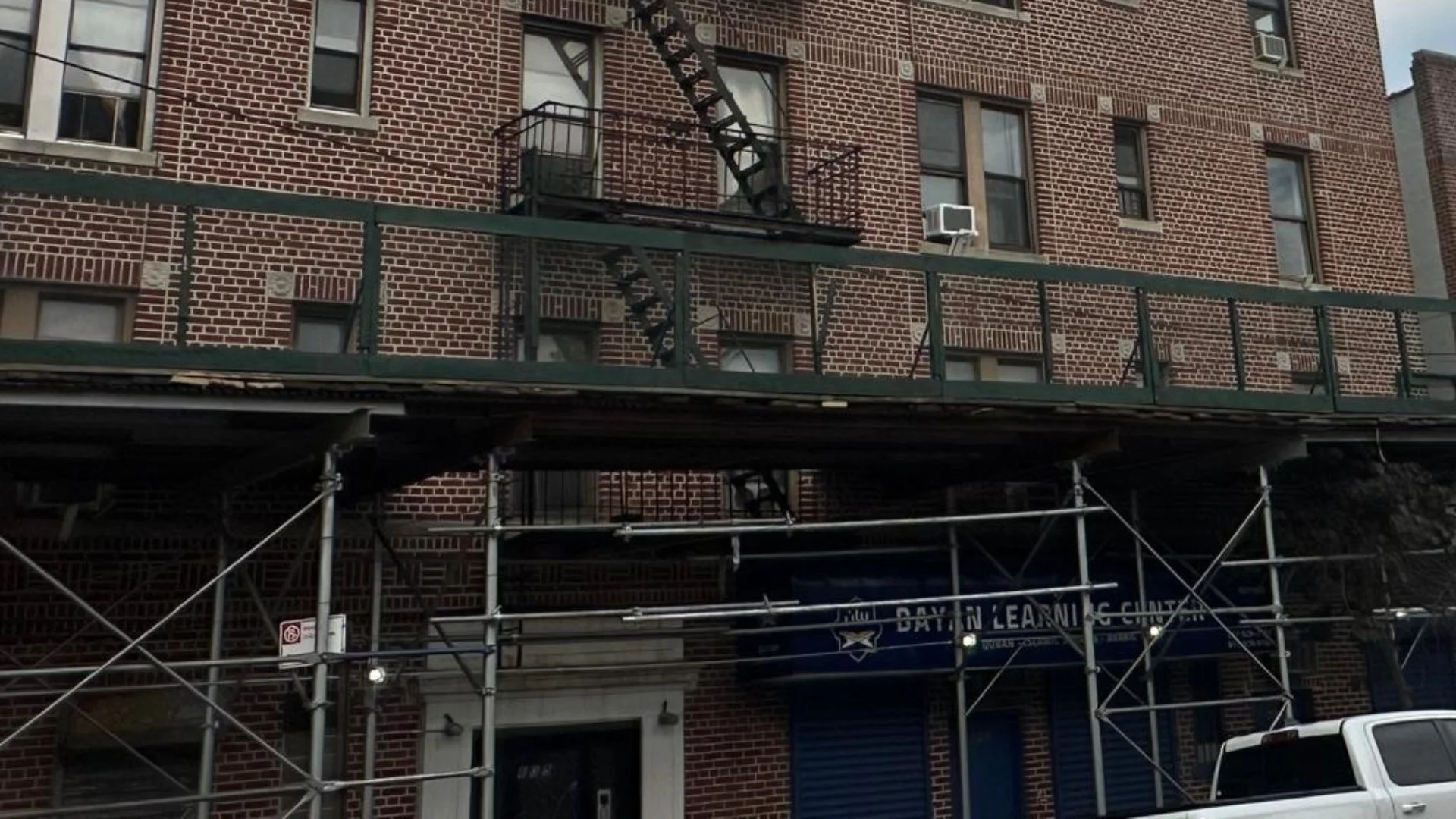
Choosing the right setup is the first step to staying on schedule. Compare our access systems below to find the best fit for your building.
Swing stages provide continuous horizontal access for facades and are safer for extended work where ground footprint is prohibited. Boom lifts are mobile but restricted by reach and ground-bearing capacity.
Choose a swing stage for general facade work, glazing, or painting. It uses a cable-suspended platform that is quick to mobilize. If your project involves heavy masonry or high-volume material transport, choose a mast climber. These power-driven platforms are engineered to move heavy loads vertically with your crew.
A standard two-point swing stage is the most efficient choice for typical facade runs with a small crew. If your project requires a longer, heavier work platform, we move to a multi-point system. By adding a third or fourth cable, we can support a larger rig that carries more weight and more personnel across a wider building section.
Quick comparison of suspended access systems:
System Type | Best For | Typical Capacity |
Swing Stage | Horizontal facade work | High (Multi-person) |
Single-Point | Tight spots /Spot repairs | Light |
Multi Point | Large, heavy-duty platforms | Very High |
Boatswain’s Chair | Inspections / minor touch-ups | Single person |
Mast Climber | High-volume material transport | Very high (material) |
Some facade and material-handling demands exceed what cable-suspended platforms can carry. For those, we deploy mast-supported access.
A power-driven, mast-supported platform that allows for higher material loads. These are used for high-volume material transport (masonry/glazing) that exceeds standard cable-suspended capacity. Recommended for projects requiring high-volume material transport alongside crew access.
Our work moves beyond general logistics to solve the specific constraints of Connecticut’s different urban and structural environments.
Dense Class A office projects in these markets demand strict street-occupancy permits and tight frontage setbacks. We coordinate the equipment staging that keeps your crew productive without shutting down local sidewalks or encroaching on high-traffic business districts.
Campus work involves high-security protocols and constant pedestrian traffic. We handle the site logistics for projects near Yale University and Yale-New Haven Health by focusing on non-intrusive equipment placement that respects campus flow and patient safety zones.
The mid-century masonry buildings in these cities require specialized shoring. We focus on the structural demands of these massive, older masonry cores, meeting the rigorous municipal bid requirements that often disqualify general-purpose rental outfits.
CTDOT-coordinated highway projects allow zero room for error. We provide the precise barrier setups and inspection access for under-bridge work and night-shift lane closures where safety documentation and speed are the only things that count.
Pre-1930 brownstone and brick parapets require vibration-sensitive access. We use specialized scaffolding that protects fragile masonry and historic building envelopes during structural repairs and tuckpointing.
Maritime facilities and defense-related environments have high-stakes site access rules. We maintain the necessary safety credentials to operate within these secure zones, meeting the daily documentation standards required by the owners.
Suspended access doesn’t start at the roof. It starts with the survey. Before we mobilize, our team assesses the four factors that decide whether a system can be rigged safely on your building:

Permit requirements vary wildly across the state. We provide the technical documentation to satisfy the AHJ (Authority Having Jurisdiction), whether your site is under the jurisdiction of a local building department or a state office.
If you are struggling with a pending permit application or unsure of your local AHJ’s requirements, our team can review your site plan and identify the specific engineering documentation needed to fast-track your approval today. Call us at (475) 231-6743.
We do not just rent equipment. We engineer your entire rigging system. Every suspended system we deploy adheres strictly to OSHA 29 CFR 1926.452(p) requirements.
“Not sure a swing stage is the right call? We’ll tell you if a boom lift or mast climber fits your building better even when that’s the smaller invoice.”
All support components are engineered to a 4:1 safety factor. Our suspension ropes meet the rigorous 6:1 safety factor required for cable-suspended systems.
We supply the equipment, load data, and technical specifications your team needs to meet OSHA 1926 perimeter and egress requirements, keeping your site accessible and safe for your crew.
Every project is overseen by a designated Competent Person who meets OSHA's training and experience criteria.
About Connecticut Scaffolding: We are Connecticut’s trusted local partner for high-reach equipment supply. We focus on delivering high-performance platforms, reliable hoists, and responsive logistics, ensuring that your equipment is ready to perform from day one of your project.
As your dedicated partner for suspended scaffolding in Connecticut, we offer a no-obligation site assessment. If we determine that suspended access isn’t the most efficient approach for your building’s geometry, we will tell you honestly.
Contact Connecticut Scaffolding at (475) 231-6743 to coordinate a site-specific takeoff and get your crew moving on the facade.
For a standard mid-rise project prices vary by rigging complexity, drop count, and building height. Send us your site plan for a formal takeoff and a firm quote within 24 hours.
All personnel working on a suspended scaffold must have valid scaffold safety training. Our crew provides a "Competent Person" to supervise the setup. They verify all anchor points are secure before work begins.
Yes, we do. We have deep experience in the high-load industrial environments of the coastal Connecticut corridor. We can accommodate the specific safety protocols required by local manufacturing and marine facilities.
Absolutely. All equipment is set up by teams trained under OSHA 1926.454 (Scaffold User Training) standards. We ensure every site lead is a designated Competent Person meeting OSHA's training and experience requirements.
Swing stages are engineered for high-rise facades exceeding 30 stories, limited only by your site rigging capacity and wind-load requirements. We handle the structural engineering for these high-elevation setups to ensure consistent stability at any height.
For work above 4 stories, a swing stage is almost always more cost-effective. Boom lifts require expensive hourly fuel, constant repositioning, and have height limitations. A swing stage provides a stable, continuous work platform for the entire facade, eliminating the downtime associated with moving a lift every few feet.
Yes. We mobilize to every corner of Connecticut, from the Fairfield corridor to the quiet corner.
22 years of engineered, compliant access from the scaffolding contractors Connecticut construction firms trust for all site-ready logistics.
Copyright © 2026, All rights reserved.