
Falls and structural failures on scaffolds always remain a safety risk in construction. OSHA created 29 CFR 1926 Subpart L to stop them. If you build, rent, or work on scaffolding in Connecticut, use this breakdown to stay compliant. These are the exact numbers inspectors check on-site.
OSHA 29 CFR 1926 Subpart L is the federal standard for scaffold design, construction, and use. It covers every system on the site, from supported and suspended rigs to ladder jack scaffolds.
Subpart L also contains the rules for aerial lifts (1926.453), but the two aren’t the same thing: aerial lifts are mobile platforms, scaffolds are temporary structures. Either way, if a worker stands on a temporary elevated platform on a construction site, Subpart L applies.
OSHA rules distinguish between these two roles. Mixing them up is a common and costly compliance mistake.
A competent person identifies existing and predictable hazards in the surroundings / working conditions. They also hold the authority to take prompt corrective action and fix them.
On a scaffold job, this person inspects the scaffold before each shift. They inspect again after any event that could affect its structural integrity, a storm, an impact, and they train workers to recognize and handle those hazards.
A qualified person holds a recognized degree, certificate, or professional standing. Structural engineers and PE-stamped scaffold designers fill this role, since it requires enough training and experience to run load calculations and set structural specs from scratch.
The qualified person designs it. The competent person inspects and supervises it day to day. Plenty of jobsites use one person for both roles, but the roles stay legally distinct either way.
Compliance officers measure these numbers on-site. Post this table in the trailer.
Requirement | Specification |
Maximum load capacity | Scaffold must support its own weight plus 4x the maximum intended load |
Fall protection trigger height | Required above 10 ft |
Guardrail toprail height | 38 in. to 45 in. above the platform |
Guardrail toprail force resistance | 200 lbs. applied in any downward or outward direction |
Toeboard minimum height | 3.5 in. |
Toeboard force resistance | 50 lbs. applied in any downward or horizontal direction |
Minimum platform width | 18 in. |
Height-to-base stability ratio | 4:1 (must be restrained or guyed beyond this) |
Crossbracing as midrail | Crossing point 20 in. to 30 in. above platform |
Crossbracing as toprail | Crossing point 38 in. to 48 in. above platform |
These specs come directly from 29 CFR 1926.451 and its non-mandatory Appendix A.
Once a worker climbs more than 10 ft above a lower level, OSHA requires fall protection. On most scaffolds, employers choose between two systems.
Toprail, midrail, and posts meeting the height and force specs above.
A harness, lanyard, and anchor point rated to arrest a fall. 29 CFR 1926 Subpart M governs these.
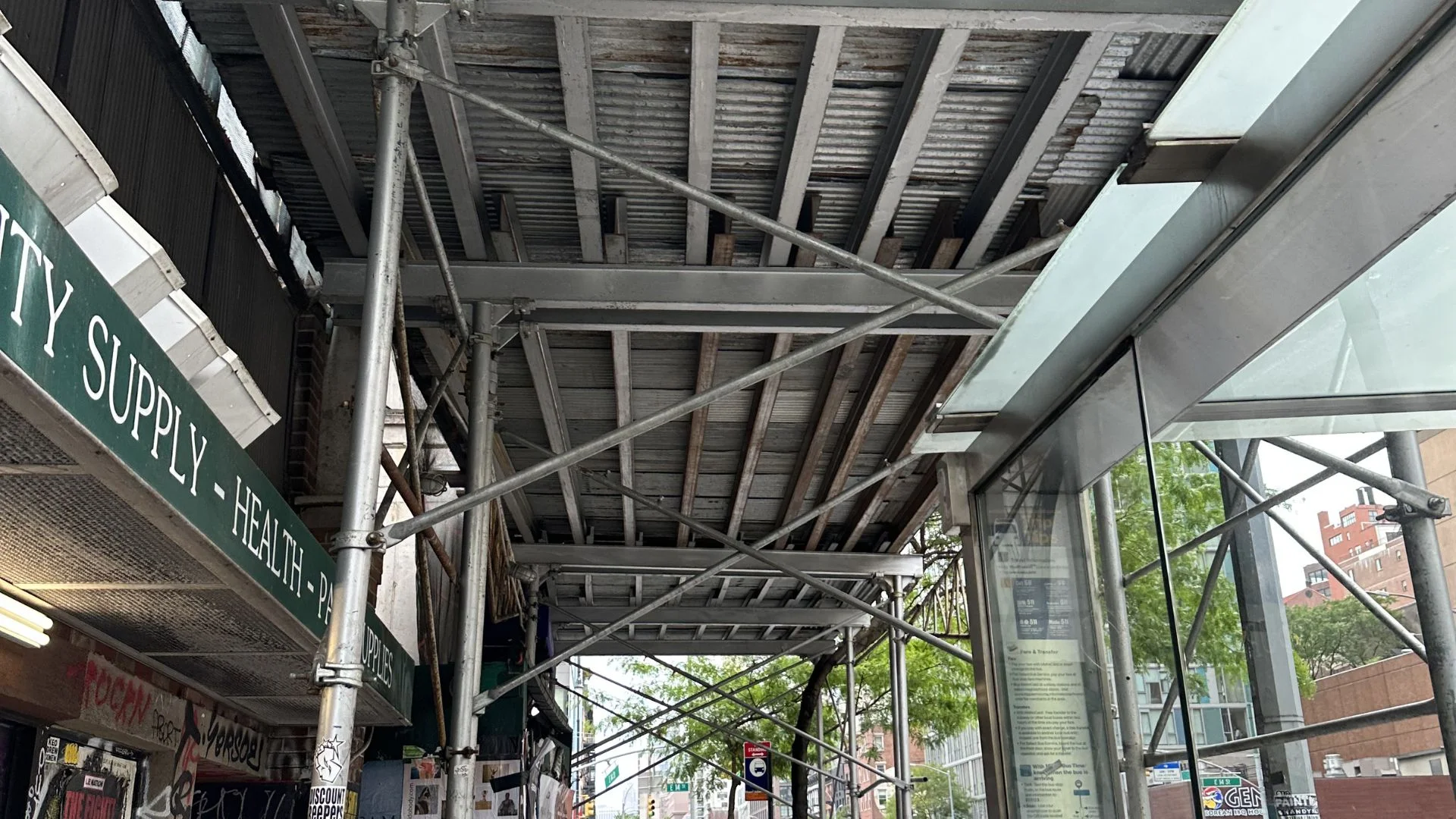
Boatswain’s chairs and single/two-point suspension scaffolds require a PFAS regardless of guardrails. Self-contained adjustable scaffolds and crawling boards follow their own combinations, 1926.451(g) spells them out.
Subpart M sets the broader fall protection rules for construction: anchor point strength, free-fall limits, rescue requirements. Lanyards and vertical lifelines need a minimum breaking strength of 5,000 lbs. When a PFAS is used on a scaffold, all equipment and procedures must meet the requirements defined in 29 CFR 1926 Subpart M
A competent person inspects scaffolding before each work shift. They inspect again after any occurrence that could affect structural integrity, high wind, a nearby impact, a structural modification.
Fix any defect on the spot. If you cannot fix it on the spot, pull the scaffold from service until you do.
Most contractors run a color-coded tag system to flag scaffold status at a glance. OSHA does not mandate this color code, but it is the industry standard, and crews recognize it everywhere.
Tag Color | Meaning |
Green | Inspected and safe for use |
Yellow | Caution. Some hazards present (like, incomplete guardrail). Use only with added precautions such as PFAS |
Red | Unsafe. Do not use until repaired and re-inspected |
Never step onto a red-tagged or untagged scaffold. Treat a missing tag the same as a red one, until a competent person confirms it is safe.
Connecticut runs its own OSHA-approved state plan, but it covers less ground than most people assume. CONN-OSHA covers only public sector workers: state and municipal government employees.
Private-sector construction in Connecticut falls under federal OSHA instead, which covers nearly every general contractor and scaffold company in the state.
Federal OSHA enforcement here runs out of the Bridgeport and Hartford area offices. CONN-OSHA adopts federal 1926 and 1910 standards essentially as written.
So the scaffold specs in this guide apply the same way, whether a project draws public or private funding.
One added layer covers public work. Connecticut law (Conn. Gen. Stat. § 31-53b) requires OSHA 10-Hour Construction training for every worker on a public building project over $100,000, and that training includes scaffold-specific hazard awareness.
Scaffold work in Connecticut must also meet the Connecticut State Building Code, which runs on the same structural and life-safety baseline as the International Building Code.
The building code covers structural safety. OSHA covers whether the people on that structure stay safe while they’re working.
If your current scaffold setup doesn’t match the specs in this table, call us before the inspector does. We provide OSHA-ready installations with signed inspection records from day one. (475) 231-6743.
Before every shift. Additionally, inspect immediately after any event affecting structural integrity, such as high winds, impact, or modifications.
The system must support its own weight plus four times the maximum intended load. This 4:1 ratio is a structural safety margin, not a load limit. Never exceed the rated capacity established by the qualified person.
Someone who can spot existing and predictable hazards in the workplace and holds the authority to fix them on the spot. On a scaffold job, this person runs daily inspections and hazard training.
22 years of engineered, compliant access from the scaffolding contractors Connecticut construction firms trust for all site-ready logistics.
Copyright © 2026, All rights reserved.